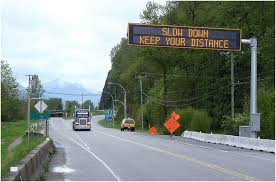
A variety of locations around the world use variable message signs to alert people to changes ahead, such as diversion due to construction or a parking guidance system. Developed in the 1950s, these signs have become an increasingly popular way to inform people of various events. While their use first gained momentum in the United States, other countries followed suit more slowly. Ontario, Canada, was one of the first to deploy variable message signs in its highways. Unlike static signs, however, these devices can display colors and can be updated from a computer or tablet.
This study tested the effectiveness of different types of variable message signs (VMS) in driving environments. Using color on a VMS may increase its readability in certain situations, but it does not significantly improve the comprehensibility of the information it contains. For example, while color is an effective tool to make traffic signs stand out, it may not always be the best option in all situations. Monochromatic signs are still the best choice in these situations. Monochromatic signs also perform better in terms of comprehensibility and visibility, as compared to those that use both colors.
When selecting a variable message sign, consider its size. Depending on the circumstances, these signs can display information up to three lines. However, they can scroll through much longer messages. In addition, each three-line section of the message will only last about five seconds before switching to a new section. Longer messages are run on an infinite loop so drivers will have plenty of time to read them. A typical sign will be a few inches long, so make sure you choose one with the correct dimensions and font style.
Variable message signs are another popular traffic management option. They can display text and pictograms. In most cases, they are made of orange LED writing. However, you may not have seen these signs on a highway yet. The signs are great for reducing traffic congestion in busy areas. It’s easy to see why these signs have become so popular. And you can ask Valley Traffic Systems about them if you’re interested in using them for your local roadways.
Variable message signs come in three form factors: front access, rear access, and walk-in. Front access signs require the sign to be lifted from the front or rear, while rear-access signs are designed for people to access the sign from inside. Whether you’re looking for a sign to inform people about an emergency, an important information will be displayed on your variable message sign. You can even customize the sign to display weather or other data on the screen.
In addition to real-time traffic information, VMSs can display safety messages, advisory messages, alternative routes, and travel time information. New technology can add color to these signs, which may increase their overall performance. Research on how to best use these signs for various purposes is needed. Currently, only limited research has been done on the effectiveness of various types of VMS. However, a wide variety of colors and fonts are available for these signs.